I have a whole day free and plan to do some retail therapy as it were, including a stop at Nordstrom rack. I have to wait until these intense pain in my right upper back subsides, but with the two Tylenol, extra strength and some tincture, I remain hopeful that it will.
A wonderful thing happened this morning. Hans got a long email from one of his childhood friends, a person he feels is one of his best friends, in fact. Since my diagnosis, his friend had not reached out to him, and Hans was naturally upset about this. He mentioned it to a mutual friend who apparently relayed the information. The email he received echoed what I have heard and discussed with my friends.
I didn’t know what to say
I knew that whatever I said wouldn’t change the circumstances
I was afraid I’d say the wrong things.
I know we’ve all felt like that at one time or another. What I have learned is that just reaching out your proverbial hand is welcome.
- Just show you care because otherwise Your silence may be misinterpreted.
- You can be honest and admit how you feel. There are no rules .. emotions are sometimes uncomfortable but so worth expressing.
- When you are the one going through something, it’s okay to be the first one to reach out to open up the conversation.
Sharing your feelings will surely help you release the emotions you have pent up inside. When we talk through a situation it can lead to a clearer mind and help us to sort out our thoughts. Sharing feelings also will help others to understand you better.
It sounds simple right? In reality, it takes concerted effort
I believe these lessons can be applied to all the relationships throughout our lives. We tend to spend too much time stewing over perceived slights. In Hans’ case, the email he received was like a hug from afar.
Here’s a page from cancer.net
Talking With Someone Who Has Cancer
Approved by the Cancer.Net Editorial Board, 05/2019
Feelings of sadness, anger, confusion, and helplessness come with a cancer diagnosis. For the person who has been diagnosed with cancer, it is helpful when friends and family members provide a comforting presence and practical support. It is often difficult for others to know what to say or start a conversation with someone who has cancer. However, staying in touch is always better than staying away. Here are some tips to help you show your support:
Take your cues from the person with cancer. Ask the person with cancer if they would like to talk about the experience. It is best to allow him or her to decide when to talk and how much to share.
Show support without words. Your body and facial expressions can also convey your message of care and support. Keep eye contact, listen attentively, and avoid distractions when talking. One important way to provide support is to share some silence without needing to drown it out with chatter.
Choose your words carefully. Make sure to acknowledge how difficult this experience is for the person. Carefully choosing what you say can help you show your support without being dismissive or avoiding the topic. For example, it is better to say, “I don’t know what to say” than to stop calling or visiting out of fear.
Here are some things you can say to help show your care and support:
- I’m sorry this has happened to you.
- If you ever feel like talking, I’m here to listen.
- What are you thinking of doing, and how can I help?
- I care about you.
- I’m thinking about you.
Here are examples of phrases that are unhelpful:
- I know just how you feel.
- I know just what you should do.
- I know someone who had the exact same diagnosis.
- I’m sure you’ll be fine.
- Don’t worry.
- How long do you have?
Practice active listening. This is a technique that professionals use to show respect. It is a helpful way for you to show that you are connecting to the person’s words and feelings. To be an active listener give your full attention, avoid thinking about what to say next, or hurrying the conversation and forcing it to a conclusion.
Use caution when asking questions. Phrase your questions carefully and consider the number of questions that you ask in a conversation. People with cancer are often asked many questions by their friends and family members, and it can become tiresome.
Make sure it is okay to give advice. Before you offer any advice, ask if it is okay and be prepared to stop if you are not encouraged to continue. If you feel prompted to make a suggestion, ask for the person’s permission to share it before proceeding. Unsolicited advice may cause unnecessary stress.
Be honest about your feelings but do not overburden. Communicate feelings you may be experiencing—such as fear, anxiety, anger, or disbelief — in response to the person’s cancer diagnosis. But try to be brief in your explanations. Spending too much time expressing difficult emotions you are feeling may overwhelm and upset the person with cancer. If you struggle to maintain your composure, give yourself some time away to calm your feelings before talking again. You may find that meeting with a counselor helps you process and manage your emotions.
Talk about topics other than cancer. Talking about usual topics may help provide a sense of balance. The intent is not to distract your friend or family member, but to help him or her maintain usual interests and connections and take a break from difficult conversations.
Encourage the person to stay involved. Help your friend or family member decide how to stay involved in his or her typical activities and continue old routines. Those steps help many people with cancer cope during a time that includes many unfamiliar experiences. However, a lack of time or energy from cancer or its treatment may prevent some people from usual activities and routines.
You may be able to help your friend or family member prioritize the activities they want to do and delegate other tasks. For example, you can suggest that your friend or family member saves energy to attend his or her child’s soccer game or school play while asking for volunteers to help with household chores.
Ask if practical support would be helpful. Offer specific examples of ways you could help during cancer treatment. Ask if those suggestions sound helpful. Ideas include running errands, caring for pets, driving the person to an appointment, or picking up children from school. This approach is better than saying, “Let me know if you need any help,” because some people have a hard time asking for help. If many friends and family members volunteer to help, you may offer to coordinate everyone’s efforts.
I am happy to report that my retail therapy was a success. Took my trusty rollerater with me, which doubles as a shopping cart and a seat when I get tired. As usual, I took quite a few items into the dressing room with me. Seven to be exact. Lo and behold, I bought six of them 🙂 if you haven’t been to Nordstrom rack, I can tell you it’s well worth the trip. They have very nice brands at reduced prices. The prices aren’t as low as TJ Maxx or marshals, but you don’t have to search so hard for the good stuff :-
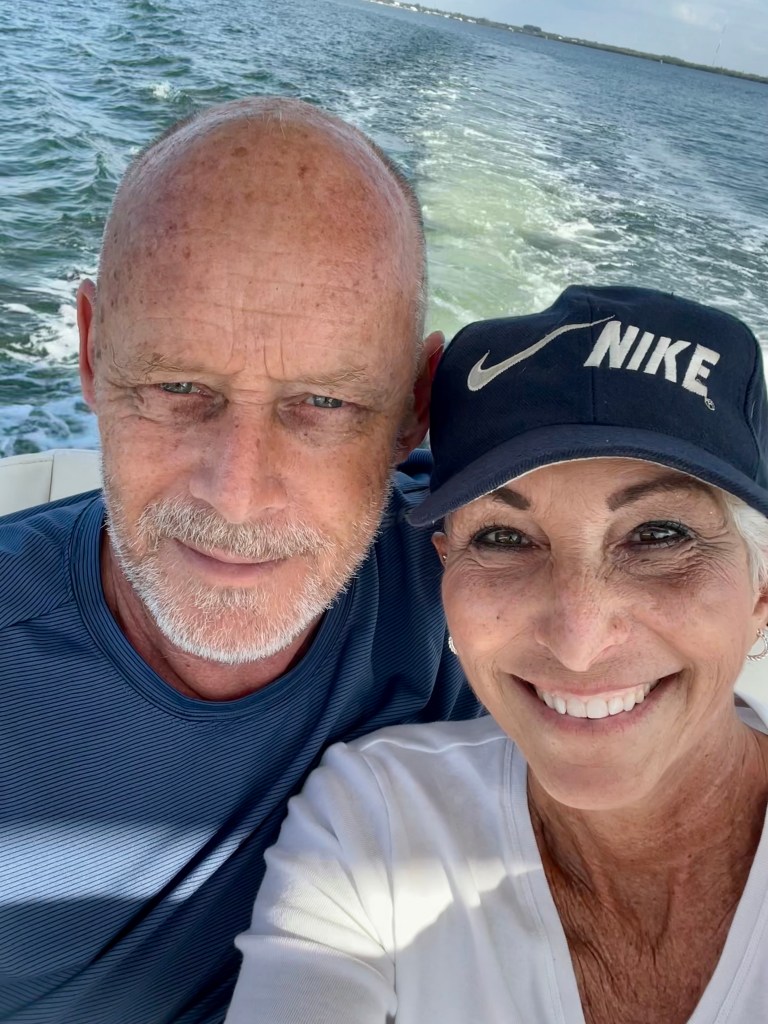
Hans and I just returned from a spontaneous boat ride. It was so peaceful and relaxing and I found myself wondering why some of us feel so drawn to water.
While water makes up about 70 percent of the human body (and about 70 percent of Earth), it also comprises 31% of our bones. We are beginning to learn that our brains are hardwired to react positively to water and that being near it can calm and connect us, increase innovation and insight, and even heal what’s broken. (Here’s hoping)
It could also be that water brings us back to our pre-birth selves. Amniotic fluid is 98% water and electrolytes. Many people believe that mimicking the condition in the womb leads to true relaxation.
And best of all, during our boat ride, we had four separate encounters with dolphins. Every time I see a dolphin, I feel like I have glimpsed magic…
 Dying with Debra
Leave a comment